
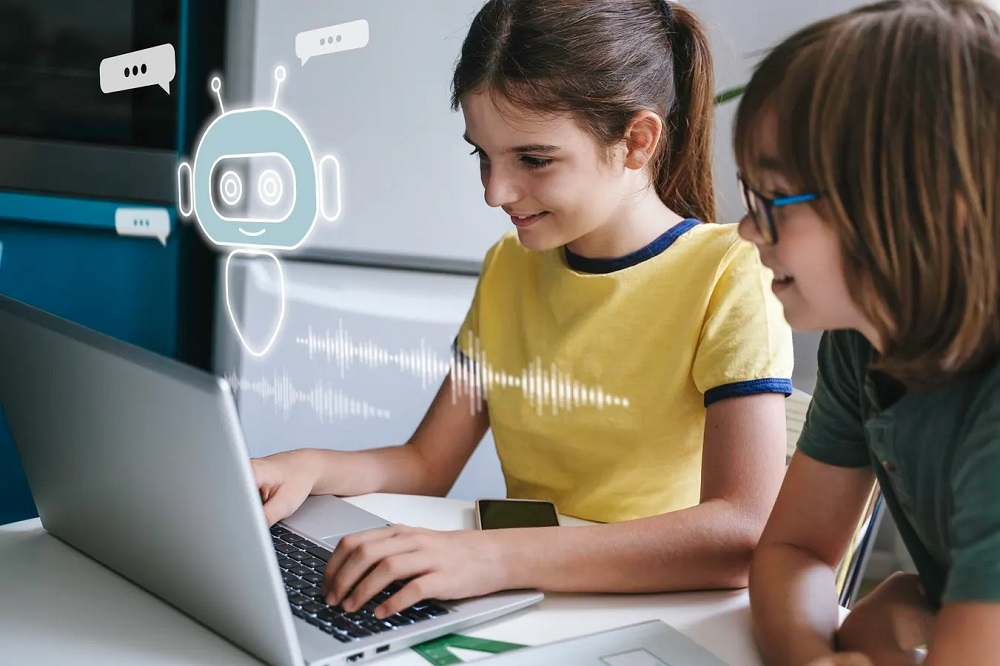

The rapid rise of artificial intelligence represents one of the most profound technological shifts in human history. Systems capable of generating complex text, analyzing massive datasets, writing software code, and creating intricate visual artwork are no longer theoretical concepts confined to research laboratories. They are active tools reshaping global industries, corporate operations, and daily communication.
As automated platforms streamline routine cognitive tasks across every sector of the workforce, educational institutions face an urgent imperative. The traditional academic model, historically designed around rote memorization, standardized test preparation, and rigid subject silos, is ill-equipped for an economy where information retrieval is instantaneous and automated. To ensure the next generation thrives, primary and secondary educational systems must fundamentally rethink how they teach, what competencies they prioritize, and how they prepare young minds to work alongside advanced artificial intelligence.
Moving Beyond Rote Learning to Higher-Order Thinking
For generations, academic success was largely measured by a student’s ability to retain, recall, and reproduce established facts. Standardized testing models reinforced this approach, placing a premium on correct answers and uniform formulas. In an AI-driven society, however, factual recall is no longer a scarce or highly valued skill. Automated systems can synthesize vast bodies of literature and execute mathematical calculations in milliseconds.
To deliver enduring value, schools must elevate higher-order cognitive capabilities to the center of the instructional framework.
Emphasizing Critical Thinking and Information Literacy
When automated platforms generate confident, fluent responses that may occasionally contain subtle inaccuracies or factual hallucinations, critical thinking becomes a primary line of defense. Students must learn how to question assumptions, evaluate sources, examine underlying biases, and verify information through rigorous cross-referencing.
-
Deconstructing Algorithmic Output: Lessons should encourage students to analyze AI-generated material critically, identifying logic gaps, structural limitations, and unverified assertions.
-
Understanding Bias and Datasets: Educators must teach how machine learning algorithms absorb historical data, showing students how societal biases can be inadvertently replicated and amplified by automated systems.
-
Source Evaluation: Instruction must shift from finding an answer to verifying the authenticity, credibility, and contextual accuracy of information sources across digital networks.
Cultivating Complex Problem-Solving
Real-world challenges rarely conform to tidy, single-answer textbook exercises. Future workforce demands will favor individuals who can navigate ambiguous, multifaceted problems that require interdisciplinary solutions. Schools must present students with open-ended scenarios where automated tools can assist in gathering data or generating initial ideas, but human judgment, systemic analysis, and contextual understanding are required to forge actionable solutions.
Integrating Technical Literacy and Prompt Engineering
Preparing students for an automated future does not mean every child must become a machine learning engineer or data scientist. However, achieving basic algorithmic and technical literacy is essential for every student, regardless of their intended career path.
Demystifying the Technology
Uncertainty often stems from a lack of understanding. When artificial intelligence is treated as a mysterious, black-box oracle, individuals tend to over-rely on its outputs or fear its capabilities. Educational curricula should introduce age-appropriate foundational computer science principles that demystify how machine learning models work. Students should understand concepts like training data, neural network architectures, probability-based output generation, and system constraints. Demystifying the technology allows students to view these tools objectively—as powerful statistical systems rather than infallible minds.
Mastering Prompt Engineering and Iterative Design
Working effectively alongside generative tools requires the ability to communicate precise intent. The skill of structuring clear context, setting boundaries, defining tone, and iteratively refining inputs to yield high-quality outputs is becoming a primary component of digital literacy.
Schools can integrate prompt engineering into existing subjects:
-
Creative Writing: Students use generative tools to brainstorm initial story outlines, analyzing how altering specific adjectives in a prompt changes the narrative arc or character development.
-
STEM Disciplines: Science students learn to query code-generation systems, utilizing automated output as a baseline draft while manually auditing, debugging, and optimizing the underlying syntax.
-
Historical Research: Social studies classes construct prompts to simulate historical perspectives, evaluating where the machine accurately reflects historical consensus and where it relies on modern generalizations.
Double Down on Uniquely Human Capabilities
As technical platforms take over repetitive analytical and operational tasks, the qualities that make us distinctly human become significantly more valuable. Educational frameworks must place explicit value on emotional intelligence, creative expression, and interpersonal collaboration.
Deepening Social and Emotional Learning
Artificial intelligence cannot experience empathy, navigate delicate interpersonal dynamics, or build genuine community trust. Skills such as active listening, emotional regulation, conflict resolution, and compassionate leadership cannot be duplicated by software.
Schools should design collaborative, project-based learning environments where students must work in diverse teams, manage group dynamics, navigate differing viewpoints, and deliver collective outcomes. Developing high emotional intelligence ensures that future leaders can lead teams with empathy and ethical clarity.
Fostering Unconstrained Creativity and Innovation
While generative models can synthesize existing patterns from training data to create novel combinations, genuine human innovation stems from lived experience, emotional resonance, and original lateral thinking.
Educational environments must give students the freedom to experiment, fail, and iterate without fear of punitive grading. By encouraging artistic creation, design thinking, philosophy, and original research, schools nurture the imaginative spark that drives true cultural and technological breakthroughs.
Reimagining Assessment and Classroom Pedagogy
Continuing to rely on traditional, out-of-class essay assignments and closed-book worksheets is increasingly impractical when automated software can generate polished submissions in seconds. Rather than engaging in an unproductive arms race using unreliable detection software, educators must modernize their approach to classroom instruction and academic evaluation.
Emphasizing Process Over Product
Traditional grading systems focus almost exclusively on the final deliverable—the essay, report, or exam score. A modernized pedagogical approach shifts focus toward the learning process itself.
-
In-Class Oral Examinations: Students defend their research verbally, demonstrating deep conceptual understanding through spontaneous Q&A sessions.
-
Iterative Draft Portfolios: Assessments track the evolution of a project over time, including initial outlines, peer review feedback, prompt logs, self-critiques, and multiple revision cycles.
-
Live Experiential Demonstrations: Evaluations take place through hands-on laboratory work, live debates, theatrical presentations, or collaborative group problem-solving sessions.
Teaching Ethical Design and Digital Responsibility
With advanced technological power comes significant ethical responsibility. Educational institutions must embed discussions around technology ethics into standard curricula. Students should grapple with real-world questions regarding intellectual property rights, data privacy, deepfake generation, academic integrity, and the environmental impact of large-scale computational infrastructure. Establishing a clear moral framework ensures that students develop into responsible digital citizens who utilize technological tools ethically and constructively.
Preparing the Workforce of Tomorrow
The primary objective of education has always been to prepare young people for active participation in civic life and the broader economy. By moving away from passive memorization and actively embracing critical thinking, technical literacy, human-centered emotional intelligence, and process-based learning, schools can ensure that technological progress serves as a springboard for human potential rather than a source of displacement.
Frequently Asked Questions
Will teaching students how to use AI tools encourage academic laziness?
When implemented thoughtfully, AI tools increase intellectual rigor rather than encouraging laziness. If assignments are redesigned to focus on higher-level analysis, verification, and creative synthesis rather than basic recall, students must think more deeply about the material. The tool handles routine drafting, allowing the student to spend more time evaluating, refining, and applying complex ideas.
At what age should schools introduce students to concepts of artificial intelligence?
Foundational concepts can be introduced in early elementary school through unplugged activities that teach logic, pattern recognition, and basic algorithmic thinking. Exposure to age-appropriate software tools, digital safety, and basic concepts of automated systems can begin in late elementary or middle school, with structured technical training and ethical discussions expanding during high school.
How can underfunded schools prepare students for an AI future without expensive hardware?
Preparing students for an AI-driven future relies heavily on developing critical thinking, emotional intelligence, collaborative problem-solving, and information literacy—skills that require minimal digital infrastructure. Unplugged computer science activities, logic exercises, debate programs, and project-based learning effectively build core competencies without demanding high-end technology investments.
How can teachers prevent students from using generative AI to cheat on homework?
The most effective way to address academic dishonesty is to adapt assessment methods. Educators can transition toward in-class writing sessions, oral presentations, collaborative group projects, and process-oriented portfolios that track student thinking over time. When out-of-class assignments require students to integrate personal experiences, local community context, or live classroom discussions, automated cheating becomes virtually impossible.
Should coding and computer science become mandatory subjects in school?
While learning full software development may not be necessary for every student, basic computational thinking and digital literacy should be integrated into core educational requirements. Understanding computational logic, how software platforms function, and how data is processed helps every student navigate an increasingly automated world, regardless of whether they pursue a career in technology.
What role should parents play in preparing their children for an AI-integrated society?
Parents can support their children by encouraging curiosity, open-ended problem solving, and healthy media literacy habits at home. Parents should engage in open conversations about digital safety, encourage children to question information they encounter online, and model responsible technology use, balancing screen-based learning with real-world social interaction and hands-on creative pursuits.

Comments are closed.